

China has achieved major breakthroughs in the exploration of oil, gas, and uranium deposits!
Release date:
2025-09-12 09:41
Source:
Xinhua News Agency
China has achieved major breakthroughs in the exploration of oil, gas, and uranium deposits!
Major breakthroughs in oil, gas, and uranium exploration have been achieved!
When summarizing the landmark achievements of the 14th Five-Year Plan in mineral exploration, Xu Dachun, Vice Minister of Natural Resources and Director-General of the China Geological Survey, placed energy minerals at the top of the list.
During the 14th Five-Year Plan period, China discovered 10 new large oilfields and 19 new large gas fields. Total newly proven oil and gas reserves increased substantially, ensuring stable domestic oil production at 200 million tonnes and natural gas output exceeding 240 billion cubic meters.
Major breakthroughs in uranium exploration have been achieved, with the discovery of two super‑large uranium deposits in Jingchuan, Gansu, and Jiayin, Heilongjiang, thereby strengthening the resource base of five major uranium mining hubs, including those in Ili and Ordos, and laying a crucial foundation for China’s uranium resource security.
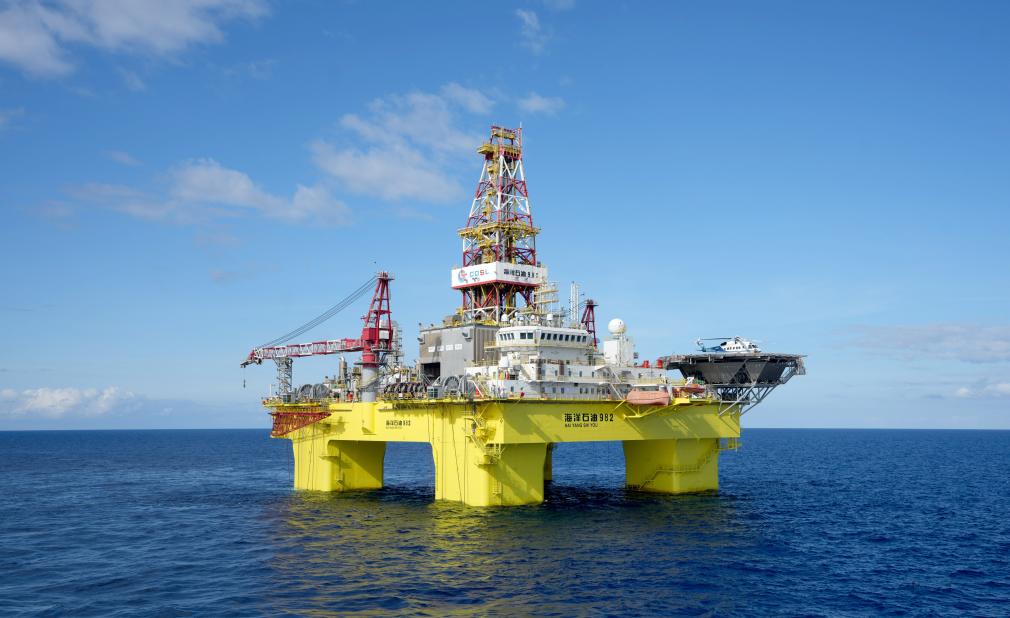
The “Ocean Oil 982” semi-submersible drilling rig (Xinhua News Agency photo)
When discussing newly discovered oil and gas reserves, it is essential to underscore the critical importance of the marine environment, particularly the deep sea. One of the major achievements of the latest strategic initiative for breakthroughs in mineral exploration is the discovery in the South China Sea of the world’s first ultra‑deepwater, ultra‑shallow‑layer large gas field—the Lingshui 36‑1 Gas Field—whose proven natural gas reserves exceed 100 billion cubic meters.
Sun Shuxian, Vice Minister of the Ministry of Natural Resources and Director of the State Oceanic Administration, stated that offshore oil and gas has become the main driver of reserve growth and production expansion in China, with the increase in offshore crude oil accounting for more than 70 percent of the country’s total crude oil production growth in 2024.
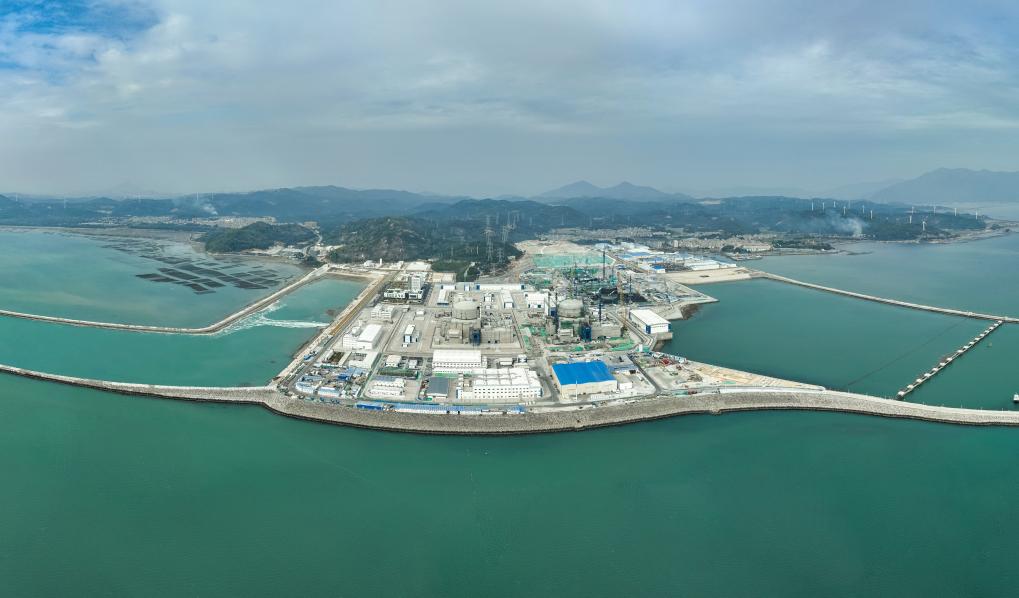
“HPR1000” Zhangzhou Nuclear Power Plant Unit 1 has been put into commercial operation (Xinhua News Agency photo).
With China’s dependence on imported oil and gas remaining high and the potential of onshore and nearshore resources being limited, tapping deep-sea energy resources is of great significance.
Deep-sea exploration and development is one of the most technologically advanced and challenging fields in the world today. Venturing into the deep sea entails overcoming critical “bottleneck” technologies—such as ultra-deepwater drilling rigs, deep-sea subsea drilling vessels, subsea production systems, and deepwater flow assurance—and driving progress across a wide range of sectors, including geophysical exploration, drilling, shipbuilding, steel pipe manufacturing, welding, remotely operated vehicles (ROVs), remote control systems, and emergency rescue operations.
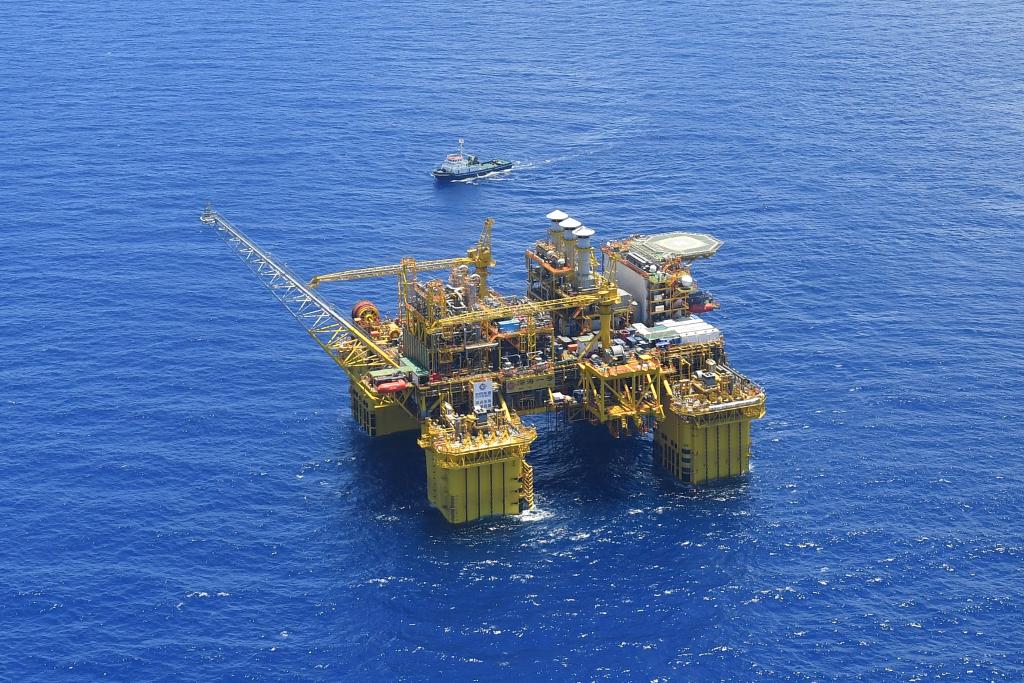
The “Deep Sea No. 1” energy station, photographed in the South China Sea (Xinhua photo)
Sun Shuxian listed the achievements with evident pride: China’s first vessel, the “Dream,” with a displacement of 42,600 tons and a drilling depth of 11,000 meters, has officially entered service, boasting world‑leading integrated drilling performance; the world’s first 100,000‑ton class production and storage oil platform, “Deep Sea No. 1,” has been completed; and major national projects such as the floating wind power platform “Haiyou Guanlan” and the deep-sea submersible “Striver” have also been successively built and put into operation.
This is not merely a matter of producing a few more barrels of oil or extracting a few more cubic feet of gas. Whoever masters deep-sea development technology holds the key to unlocking the resource treasure trove of the future.

Uranium mineral—calciouranophyllite (Xinhua News Agency photo)
Oil and gas are vital to the current stable operation of the economy, while uranium is crucial for securing the future of our energy supply.
Uranium is the fuel for nuclear power plants and plays a crucial role in advancing the energy transition and achieving the “dual carbon” goals. Nuclear energy not only provides an ideal replacement for coal-fired power but also complements wind, solar, and hydropower by remaining unaffected by weather or seasonal variations.
A small amount of uranium fuel can generate as much electricity as vast quantities of coal or fossil fuels, and it is relatively easy to establish long-term strategic reserves at a comparatively low cost, making it of profound significance for reducing dependence on fossil energy and achieving a low‑carbon transition.
Recommended Updates

Address: No. 80, Lishan Road, Lixia District, Jinan City, Shandong Province, China
Postal Code: 250013
WebChat